

EDIT: New insights on the relationship between property and value have been added at the end.
Manual to Humanity either adjusted or revealed a few previously obscured or undiscovered aspects of libertarian philosophy, like objective morality, just acquisition and threat assessment. One thing that remained unanswered, in my mind, was why I would have a claim on the property of someone who had violated my property in a way that made that my property unrecoverable. It’s one of those ideas that seems to flow from the logic of property so easily that I simply asserted it as true without realizing it needed to be reasoned out on its own.
I’ve been ’round and ’round with this and I’ve finally come to an unexpected conclusion.
Let’s say that Bob took some food from Tom and ate it without Tom’s consent. The food now no longer exists, for all practical purposes. Originally, I would have asserted that Tom now has a claim on Bob’s property because Bob had violated Tom’s property, transferring the value of Tom’s property to Bob without Tom’s consent. Bob had displayed that he rejects the moral principle that property should be respected, and that applies to his own property and, therefore, Tom would not be violating Bob’s property if he took property from Bob in order to replace the value of the food Bob took from Tom without Tom’s consent. But objective or universal moral principles can’t be based on subjective ideas. Objective morality isn’t based on “value”, it’s based on “those material objects to which no one else has an equal or greater claim, nor for which others can be assigned responsibility”. In this way, the assertion in Manual to Humanity is inconsistent with itself. Libertarians and, in particular, Austro-libertarians, should understand that value is subjective. The value of any object to any person is going to be different based on any person’s current situation and preferences. Ordinarily, a 100 oz gold bar would be more valuable to me than most other things, however, if I found myself in the desert, my values would suddenly shift away from gold and toward shade and water. But values shift in this way constantly, though less radically, for everyone in every moment. In this way, the value Tom places on the food Bob took from him can’t really be pinned down in any objective way, in any permanent sense, even by Tom himself!
The point is, for a philosopher to claim, as I previously did, that the violation of one’s property creates a claim on the property of the violator, the moral principle would need to be based on value, rather than material objects. Material objects objectively exist and value is merely subjective, so it can’t be true that the violated party, Tom, in this case, has an objective claim on the property of the violator! The property owner does, actually have a right (or an entitlement) to his own property, and, if that property is taken from him without his consent, he may recover that property by any means necessary, because he has a right to do what he wants with his property and, because no one else has a right to the property of others, they may not, morally, stop him from recovering his property. However, if his property no longer exists, or the violator no longer possesses the stolen property, like Tom’s food that Bob ate without Tom’s consent, there is nothing for Tom to recover. Under no circumstance does one have a right to the property of others, even if others have violated one’s property.
That is all very unsatisfying, because it seems unjust that someone can take what’s yours, dispose of it in some way without your consent and owe you nothing. I think, however, that this is something a free market would deal with. Obviously, everyone has an interest in getting their stolen property back, in whatever form they can, even if that property no longer exists. Even consistent property violators would want this for their own property. Therefore, some arrangements could be made to mitigate these bad outcomes. For example, people could have insurance against property violation, and if property were violated, the insurance company would pay out and the property violator’s premiums would go up accordingly, effectively wiping out the long-term gain the violator may have gotten from violating the property. The violator may, in fact, find that he can’t be insured, which would make his property vulnerable to uncompensated violation.
Before wrapping this up, I want to address another issue I brought up earlier. I said, “…Bob had displayed that he rejects the moral principle that property should be respected, and that applies to his own property and, therefore, Tom would not be violating Bob’s property if he took property from Bob in order to replace the value of the food Bob took from Tom without Tom’s consent”. In the moment that property is being violated, I think (as of this writing, anyway) that this is a defensible position. I’ve written on this before in the Defense of Others post. However, people change over time. Tom demonstrates, in taking Bob’s bike without Bob’s consent, that he rejects the idea that property should be respected, including his own, since property is universal among humans, which constitutes Tom’s blanket consent to the use of Tom’s property by anyone, including Bob. But if, later, Tom has a change of heart and no longer approves of his past actions, he effectively withdraws his blanket consent. So, that concept is still applicable, but only during the act of the violation of property, which includes the time during which Tom refuses to return Bob’s bike.
The conclusion is that one does not have a claim on property that no longer exists, nor does one have a claim on the property of the violator because property is material and, therefore objective and “value” is subjective and indeterminate. An objective principle, like “By violating his victim’s property, thereby transferring value from the victim to himself, he creates a claim on his own property by which the victim may attempt to recoup the value taken from him…” can’t be based on a subjective concept. It’s ok, a free market would take care of this worrying conclusion in the real world.
UPDATE:
This post bugged me, maybe for obvious reasons. It just didn’t seem right that a thief wouldn’t owe you something after stealing your property and disposing of it. Even if he doesn’t have it anymore, he took value from you, and isn’t that what we’re really concerned with?
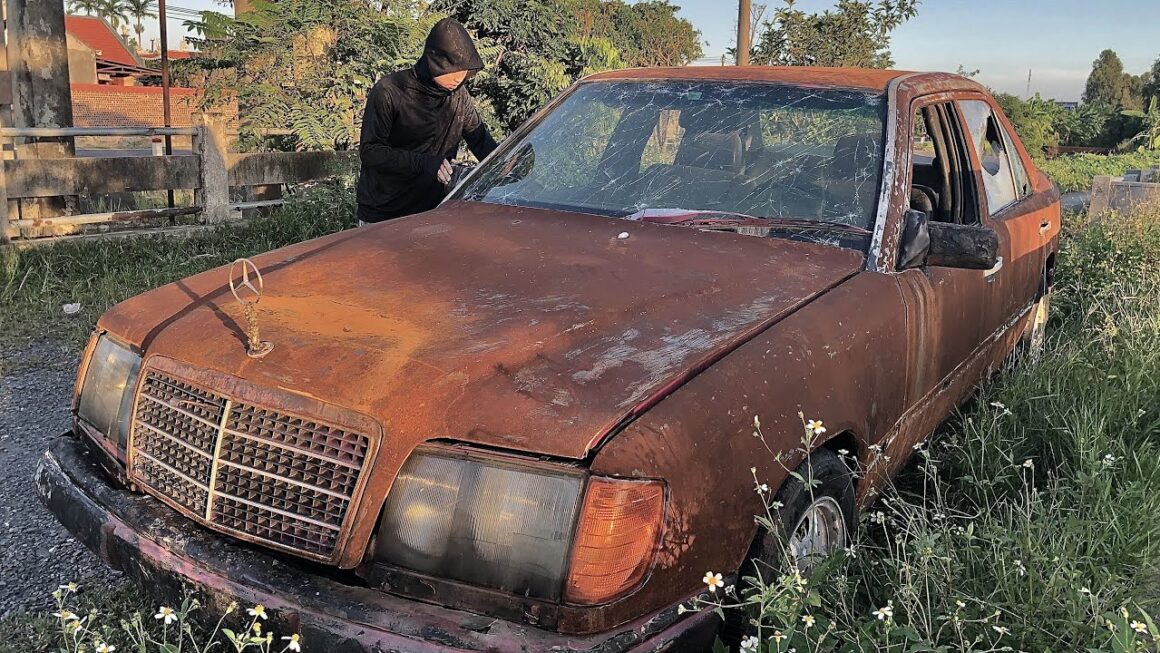
If you have a rusted out car in your yard and you hate it and would be willing to pay someone to take it away, is it really property? In this case you not only don’t value it, you negatively value it. It has less than zero value to you. So much so, that you might be willing to pay someone to take it. But, if your sworn enemy wants the car and you would hate to see him benefit from it more than you hate it being in your yard, you’d clearly have the right to disallow his taking. The definition of property, mentioned previously, “those material objects to which no one else has an equal or greater claim, nor for which others can be assigned responsibility”, holds and doesn’t seem to be affected by the value that one may find in his property.
I was thinking that there may be some inextricable link between property and value that might make them part of the same phenomenon. Turns out, it’s less exciting than that.
On a long road trip, I decided to buckle down and really think through this. The conclusion was that the original logic of this post is correct and that value isn’t directly connected to property at all. As previously mentioned, value is highly subjective. In fact, the value of your own property changes slightly from moment to moment in degrees that you yourself probably can’t quantify.
So far, nothing new.
The insight is that the laws of property are universal and that if someone destroys your property, they owe you nothing, but you also owe them nothing if you destroy theirs. Destroying your property opens up the violator to your destruction of his property. The retaliation is likely to be asymmetrical, meaning that the violator knows exactly how much value he got from destroying your property, but he has no idea how much value might be taken from him in your retaliation. Maybe he steals your apple and eats it and then maybe you burn his house down, or worse. Maybe he’ll just get away with it, but that’s always a risk. Maybe he finds that the entire community is on your side, since no one likes a thief.
The key for value is that it can be used as a legal proxy for lost property. Knowing that in destroying your property the thief has set himself up for possibly dire retribution, he may agree to compensation through legal arbitration using value as a representation of property. It would be up to the victim to state the value of the compensation and to the arbitrator how much is awarded.
Even though it’s still a little disturbing that someone owes you nothing for destroying your property, it is poetic that all of the incentives and human nature itself, line up against such behavior. Humans are genetic propertarians and there’s no escaping that!

One thought on “Can We Recover Stolen Property?”
Comments are closed.