As I explained in Man’s Evolutionary Flaw, mankind took a wrong turn at the agricultural revolution. What we call civilization and, especially modern civilization, is an artifact of that event. Our evolutionary path has not prepared us for civilization and, even though we may not be consciously aware of it, we all recognize it.
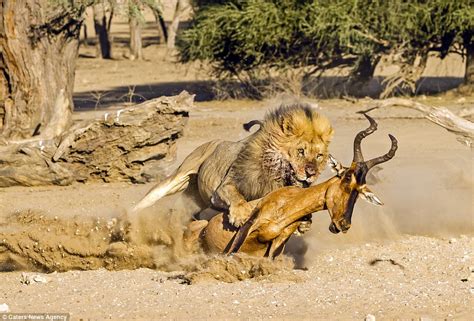
That universal recognition is one explanation for the popularity of apocalypse media, like movies and tv shows based on the idea of civilizational collapse through one means or another. Deep down, we all know that humanity isn’t where it was intended to be and there’s a longing to return to our true nature. The zombie apocalypse isn’t a nightmare, it’s a fantasy. Man was never domesticated. We are wild animals living in a cage built for us by the political class and we want to escape the cage just as any caged animal wants freedom. Any time a caged wild animal escapes, he quickly returns to the feral roots of his true nature.
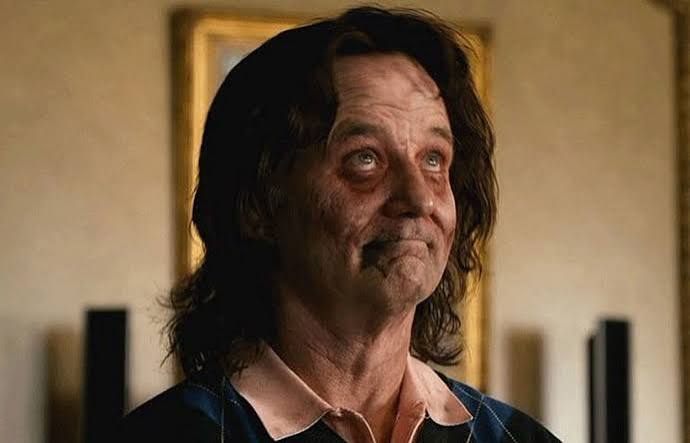
You might think that speculation is a bit of a stretch, but here’s an even bigger stretch; the zombies the survivors are fighting represent the corrosive influence of civilization that they’re trying to escape. The goal of the zombies is to return escapees to their former enslavement so that only zombies exist. What better metaphor than the zombie to represent the way most people exist in modern society?
Seems like I should close this out somehow, but that’s the whole idea, so I’ll just end this short post in this awkward way.
P.S. Here’s what my Pocket said about the monologue I dictated to it before I wrote this post:
Evolutionary Mismatch, Civilizational Critique, and the Apocalypse Fantasy
Overview
Today’s discussions centered on a deep philosophical exploration of the tension between human evolutionary biology and the structures of modern civilization. The core narrative suggests that humanity exists in an “unnatural state,” having deviated from its biological roots as nomadic pack hunters following the agricultural revolution. This shift is identified as the primary inflection point that enabled the rise of a political class and what was described as the systemic enslavement of the species.
A significant portion of the dialogue focused on the psychological appeal of post-apocalyptic narratives. Rather than simple escapism or a fear of death, these stories are interpreted as a subconscious manifestation of a desire to reset the world. By stripping away complex, elite-driven systems, the “apocalypse” serves as a proxy for returning to a state of high autonomy and social cohesion within small, immediate groups. The survivors in these scenarios are not just fighting for life, but are attempting to escape the constraints of modernity itself.
Wins & Insights
- Identified the agricultural revolution as the critical historical pivot that replaced nomadic autonomy with sedentary, politically stratified systems. (Conversation: Mankind’s Natural State and Civilization)
- Recognized that the popularity of zombie and post-apocalyptic media stems from a latent psychological desire to return to a pack-oriented, individualistic existence aligned with human evolution. (Conversation: Mankind’s Natural State and Civilization)
Ideas
- Proposed a symbolic interpretation of zombies in fiction where the undead represent the mindless, systemic structures of modernity that survivors are trying to outrun. (Conversation: Zombies as Modernity Metaphor)
Challenges & Patterns
- Pattern of Systemic Critique: A consistent theme emerged framing modern civilization not as progress, but as a non-optimal state that creates deep psychological tension and a subconscious longing for societal collapse. (Conversation: Mankind’s Natural State and Civilization)
Me, again. I thought that was a compelling way to put it, therefore, worth posting.